Re-profiling Heads
Posted: Tue Nov 03, 2020 9:02 pm
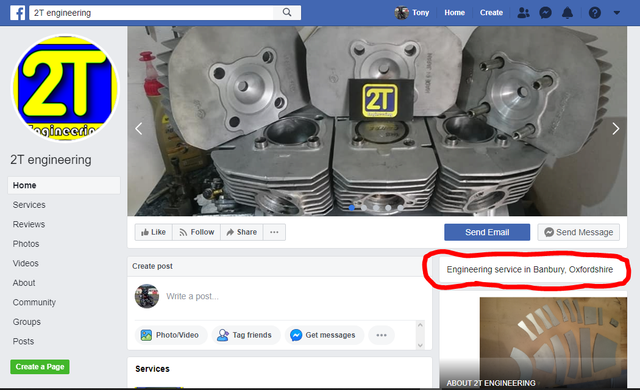
Came across this article by Rob Pemberton from SPA Motorcycles, Cheltenham, in a recent issue of Classic Motorcycle Mechanics and it got me thinking, how many times have you heard recently of someone seizing a freshly built motor? Has anyone had their heads re profiled with a modern squish and combustion chamber shape? Must be a good business opportunity there for someone, plenty of triple heads!
There was a time when you could rip merry hell out of the various ports then up the compression ratio of a two-stroke and it would fly. Sadly that's not the case now and if such an approach does work then it's more by luck than judgement. Modern pump petrol. even Supergreen high octane, bears little resemblance to even the roughest Two Star pre-1988. The fuel we buy now is designed specifically for injected engines that are purposely designed to run high compression ratios and lean burn technology in the name of low emissions. Old motorcycles in general, and two-strokes in particular, simply don't figure on the petrol companies' radars. Add in the introduction of ethanol to every commercial fuel pump sold across the UK and things aren't getting any easier for those that love their strokers!
The old-style fuels were effectively much slower burning than the modern petrol and this alone cause riders untold headaches when it comes to getting their bikes to run as they should.
The practice of simply skimming cylinder heads to boost power is now almost certainly a surefire way to kill a stroker. Increased compression ratios allied to modern petrol will generally result in detonation of the fuel to the severe detriment of the piston crown and. if the engine isn't stopped quickly, you'll likely be looking at a possible seizure. Not convinced? Well, here's an expert's overview:-
There was a time when detonation was generally a function of poorly set ignition timing, allowing the plug to fire well before the point in the piston's rise than it should do. Now we're seeing a wide range of two-stroke motors in various stages of jeopardy due to the atomised fuel exploding under pressure before the plug has a chance to spark. At best the piston crowns tend to be pock-marked, but we've seen engines where the edges of the crown have been eroded away, promoting seizures and even large , irregular holes, from this phenomena. There's no one single type of motor that's susceptible to this and we've seen everything from 1962 Yamaha YDS2s right through to Suzuki Gammas affected.
According to our man on the front line detonation can happen at any time, but is often catalysed by an engine rebuild:-
"We had a customer who'd restored a Kawasaki KH400, but was having issues with random rattling noises. When the motor was stripped down we found the main issue was that the cheap pattern pistons he installed were far from being dimensionally correct. This, allied to the profile of the cylinder heads, was creating piston slap along with the very first stages of detonation. We fitted new, high-quality pistons, and re-profiled the cylinder heads to give the motor a proper squish bands and a compression ratio that would work with modern petrol. After that the bike ran like a watch.”
There was a time when you could rip merry hell out of the various ports then up the compression ratio of a two-stroke and it would fly. Sadly that's not the case now and if such an approach does work then it's more by luck than judgement. Modern pump petrol. even Supergreen high octane, bears little resemblance to even the roughest Two Star pre-1988. The fuel we buy now is designed specifically for injected engines that are purposely designed to run high compression ratios and lean burn technology in the name of low emissions. Old motorcycles in general, and two-strokes in particular, simply don't figure on the petrol companies' radars. Add in the introduction of ethanol to every commercial fuel pump sold across the UK and things aren't getting any easier for those that love their strokers!
The old-style fuels were effectively much slower burning than the modern petrol and this alone cause riders untold headaches when it comes to getting their bikes to run as they should.
The practice of simply skimming cylinder heads to boost power is now almost certainly a surefire way to kill a stroker. Increased compression ratios allied to modern petrol will generally result in detonation of the fuel to the severe detriment of the piston crown and. if the engine isn't stopped quickly, you'll likely be looking at a possible seizure. Not convinced? Well, here's an expert's overview:-
There was a time when detonation was generally a function of poorly set ignition timing, allowing the plug to fire well before the point in the piston's rise than it should do. Now we're seeing a wide range of two-stroke motors in various stages of jeopardy due to the atomised fuel exploding under pressure before the plug has a chance to spark. At best the piston crowns tend to be pock-marked, but we've seen engines where the edges of the crown have been eroded away, promoting seizures and even large , irregular holes, from this phenomena. There's no one single type of motor that's susceptible to this and we've seen everything from 1962 Yamaha YDS2s right through to Suzuki Gammas affected.
According to our man on the front line detonation can happen at any time, but is often catalysed by an engine rebuild:-
"We had a customer who'd restored a Kawasaki KH400, but was having issues with random rattling noises. When the motor was stripped down we found the main issue was that the cheap pattern pistons he installed were far from being dimensionally correct. This, allied to the profile of the cylinder heads, was creating piston slap along with the very first stages of detonation. We fitted new, high-quality pistons, and re-profiled the cylinder heads to give the motor a proper squish bands and a compression ratio that would work with modern petrol. After that the bike ran like a watch.”